
How Often Should You Pump Your Septic Tank in Colorado?
The 3-to-5-year rule is a starting point, not an answer. Here's how household size, tank size, garbage disposals, and Colorado clay soil set your real schedule.
📞 Call (303) 632-0124
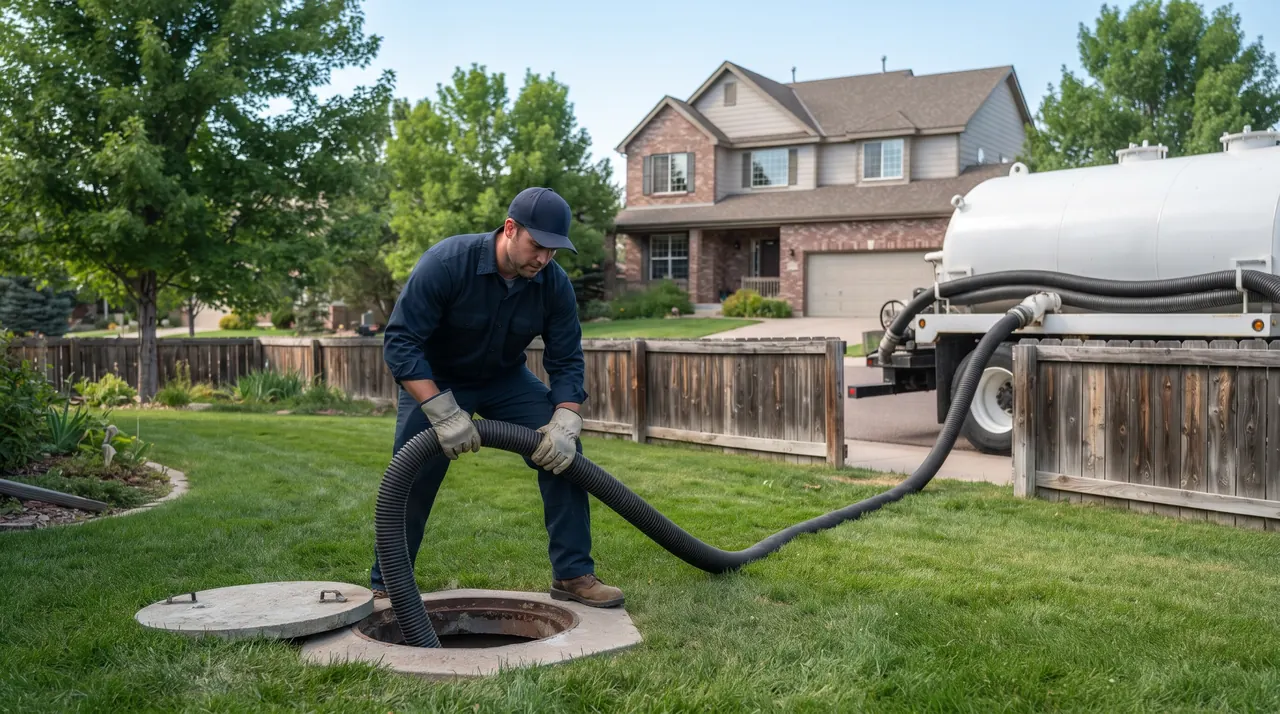
Ask ten septic companies how often a tank should be pumped and most will give you the same answer: every three to five years. That range is honest — but it's a starting point, not a schedule. The right interval for your Littleton home depends on how your household actually uses the system, and on the ground it drains into. Here's how to work out your real number.
The Rule Behind the Rule
A septic tank separates wastewater into three layers: scum on top, clarified liquid in the middle, and sludge on the bottom. Only the middle layer should flow onward to the drain field. Pumping is due when the sludge and scum layers grow thick enough to threaten that boundary — because once solids escape into the drain field, they clog the soil in ways that are slow and expensive to undo. The 3-to-5-year range is simply how long a typical household takes to reach that point.
What Shortens Your Interval
- Household size. More people means more water, more solids, faster accumulation. A five-person home fills a tank far faster than a couple in the same house.
- Tank size. Smaller tanks reach the danger zone sooner. Most Littleton-area homes have 1,000 to 1,500 gallon tanks, but older and smaller properties can have less.
- Garbage disposal use. Disposals route ground food solids straight into the tank. Heavy disposal use can move a household from the five-year end of the range toward three years or less.
- Water habits. Long showers, constant laundry, and leaking fixtures all push more water through the system, stirring solids and shortening the safe interval.
Why Colorado Changes the Math
Much of Littleton sits on clay-influenced soil, and clay drains slowly. A drain field in clay has less margin for error: if solids do escape the tank, the field clogs faster and recovers worse than the same field in sandy ground. Foothills neighborhoods add their own wrinkle — rocky, sloped lots where fields drain along grades. In both cases, the protective move is the same: pump on the earlier, safer side of your range rather than stretching it.
Winter matters too. A tank that goes into the frozen months already near capacity has no buffer when holiday guests add load. Many of our customers schedule pumping in the fall for exactly that reason.
The Easiest Way to Know: Measure, Don't Guess
At every pumping visit, we measure the sludge and scum layers before we pump and note them in your service record. Two visits of real measurements tell us more about your household's true interval than any chart. If you've never had your tank serviced — or can't remember when it was last done — treat that as its own answer: book septic pumping in Littleton and an inspection now, and start your record from solid ground.
Not sure where your system stands? Call (303) 632-0124 and we'll help you work out the right schedule — or take a look at our maintenance plans and let us track it for you.
Quick Questions
For most households, yes. The interval protects your drain field — the part of the system that is by far the most disruptive and expensive to replace. Pumping on schedule is the cheapest protection in the whole system.
Sludge and scum escape into the drain field and clog the soil. Early symptoms are slow drains and odors; late symptoms are surfacing effluent and a field that needs major repair or replacement.
Opening a septic tank is genuinely hazardous — gases inside a tank can be lethal, and lids are heavy. Leave measuring to a technician with the right equipment; it's a standard part of every service visit.
More Septic Guides

7 Septic Emergency Warning Signs You Should Never Ignore
A septic system almost always warns you before it fails. These are the seven warnings that mean 'call today,' and the first steps to take.
Read the guide →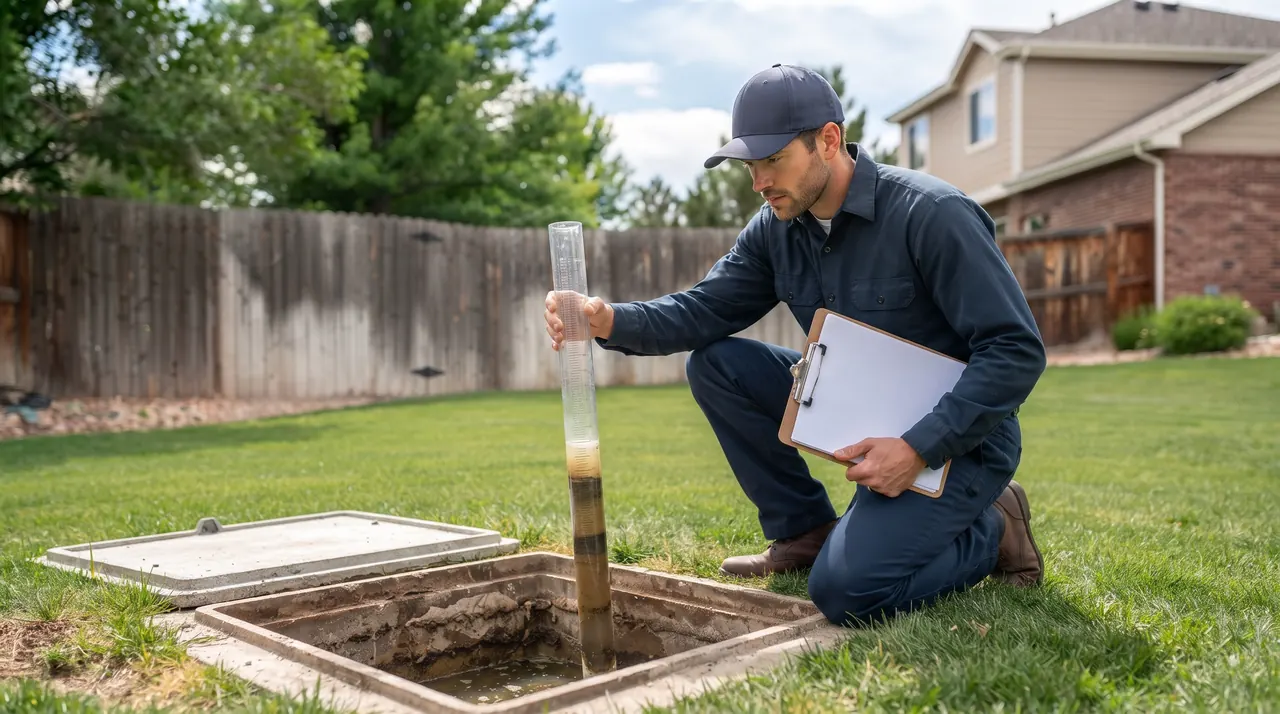
Selling a Home With a Septic System in Colorado? The OWTS Transfer Inspection, Explained
A septic system can surprise a closing if nobody looks at it in time. How the transfer inspection works, what it covers, and when to schedule it.
Read the guide →
Drain Field Failure: The Early Warning Signs Littleton Homeowners Miss
Drain fields rarely fail overnight. They decline in stages — and the early stages are easy to miss if you don't know what you're looking at.
Read the guide →Our Septic Services
Pumping, inspections, repairs, installations and more across Littleton and the south metro.
See all services →